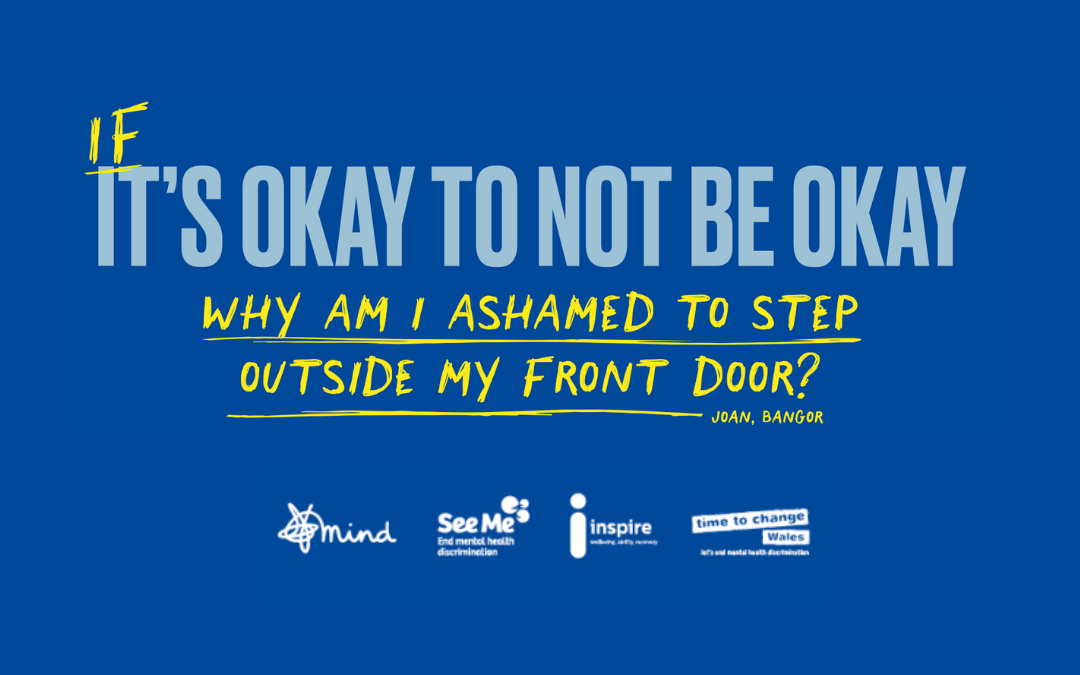
A pair of newly published polls have revealed how people across the island of Ireland perceive mental illness. In response to figures highlighted by the research, Inspire has launched the If It’s Okay campaign, which focuses on the voices of individuals with lived experience of shame stemming from mental illness.
Two surveys, covering 1,000 adults in Northern Ireland (NI) and the Republic of Ireland (RoI), were carried out by Censuswide during late February 2024. They found that 14% of those polled in the North would be strongly or somewhat concerned about working alongside someone who is living with mental illness. In RoI, the number here was 20%. By contrast, 64% of people in NI disagree with that contention – as do 60% of workers on the other side of the border. The strongest expressions of support, in both jurisdictions, came from women and people aged 45 and older.
Elsewhere, 64% of NI respondents with experience of mental illness have felt shame because of it, while 55% think that the level of related stigma has decreased over the last five years. Their peers in RoI offered similar feedback on these respective questions: 59% and 58%.
Majorities in NI and RoI (53%; 57%) said that mental ill health is negatively portrayed in the media and that there is still a great deal/fair amount of shame associated with the subject (54%; 60%).
“It’s okay not to be okay” is one of the most well-used lines in mental health campaigning but, for many facing mental illness, this does not always ring true.
Inspire – a member of the Anti-Stigma Alliance alongside Mind, See Me Scotland and Time to Change Wales – is now using the new campaign to appeal to everyone to mean it when they say, “It’s okay not to be okay”. It is also appealing to the public, including people in workplaces everywhere, to challenge shame and discrimination directed against those living with mental health diagnoses.
It also aims to understand what the “It’s okay…” phrase might actually mean for a person living with mental illness.
Kerry Anthony MBE, CEO of Inspire, said:
“Inspire supports over 25,000 people a year and many of them live with serious mental illnesses. We hear about how their friends, families, communities and even their GPs can make them feel ashamed. But we also know about how they feel ashamed of themselves.
“This campaign is about challenging the narrative that many of us know and employ so often. We aren’t saying that the phrase ‘It’s okay not to be okay’ is wrong. However, the question we’re asking is this: if it’s okay not to be okay then why are people still encountering shame and discrimination around their mental health diagnoses?
“We are here to say that living with mental ill health does not mean that they are alone. Nor should they feel shame. We are here to help and support them.
“As a society, we have a long way to go. Over half the population believes that mental illness and shame are linked. We want to send a clear message that nobody should be ashamed of their mental ill health.
“By reflecting on our own attitudes and behaviours, we can develop self-awareness. Whether it’s thinking about the language we use, educating ourselves or reaching out for support, we can all play a role in changing lives for the better.”
For information about If It’s Okay, including advice and information for anyone living with mental ill health, click here. Follow the conversation on social media, via #IfItsOkay.
If you would like find out more about Inspire’s workplace wellbeing services, head over to this page. You can also reach out to us via e-mail: enquiries@inspirewellbeing.org.
More from our blog
Menopause and work
The menopause is a natural biological process. It occurs when your ovaries age and naturally produce lower levels of reproductive hormones. The menopause may have a significant impact on home life and work performance. This can be unsettling, particularly if a particular role carries lots of responsibility. The hormonal changes…
Understanding Stepped Care and its role in workplace wellbeing
The stepped care model is a fundamental part of Inspire's workplace offering. So, what is it and why is it so important?

National Work Life Week
Finding Balance in a Busy World National Work Life Week takes place from 5-9 October 2026 and encourages people to reflect on how they can achieve a healthier, more sustainable balance between work and personal life. Every year, National Work Life Week encourages individuals and organisations to reflect on how…
World Mental Health Day
This month is an opportunity to notice how we support one another, challenge assumptions and create more inclusive spaces. By listening with empathy and staying open to different perspectives, we can all contribute to a kinder and more understanding workplace. World Mental Health Day, observed annually on 10 October, encourages…
World Gratitude Day
The power of appreciating what matters World Gratitude Day, celebrated annually on 21 September, encourages us to pause and recognise the people, experiences and opportunities that positively impact our lives. In today\'s fast-paced world, it\'s easy to focus on deadlines, demands and what\'s still left to do. Gratitude invites us…
World Suicide Prevention Day
World Suicide Prevention Day encourages people around the globe to raise awareness, reduce stigma and promote actions that can save lives. Suicide remains a significant public health challenge across the UK and Ireland. According to the latest available data, 5,717 suicides were registered in England in 2024, while Northern Ireland…
National Wellness & Happiness Happens Month
July invited us to pause. Through Alcohol Awareness Week and a focus on self-care, many of us took the opportunity to reflect, reset and make small changes – whether that meant becoming more aware of our habits, building in better routines, or simply taking a bit more time to look…
International Self-Care Day
In a world where busy often feels like the default, self-care can sometimes be misunderstood as a luxury – something we get to if we have the time. In reality, self-care is much simpler, more accessible, and far more essential than that. At its core, self-care is about consistently doing…
Alcohol and Me
Alcohol Awareness Week (6-12 July), returns this month with a simple but powerful focus: ‘Alcohol and me.’ Rather than telling us what we should or shouldn’t be doing, this year’s campaign is asking everyone to pause and reflect on their own relationship with alcohol, and how it fits into their…
PTSD Awareness Day
Trauma isn’t always dramatic or visible. In reality, it can come from things many of us experience at some point in life - not just rare or extreme events. It could be a car accident, losing someone suddenly, going through a serious illness, experiencing ongoing stress, or difficult experiences growing…

Men’s Mental Health Week
Every June, Men’s Health Week (15th to 21st) highlights a simple but powerful message: men’s health needs more attention - physically and mentally. While progress has been made, the reality across Ireland, the UK, and globally, is that men still experience poorer health outcomes and are less likely to seek…
World Day for Cultural Diversity
World Day for Cultural Diversity on 21 May celebrates the different cultures, identities, experiences and perspectives that shape who we are – and how diversity enriches our workplaces, communities and conversations.