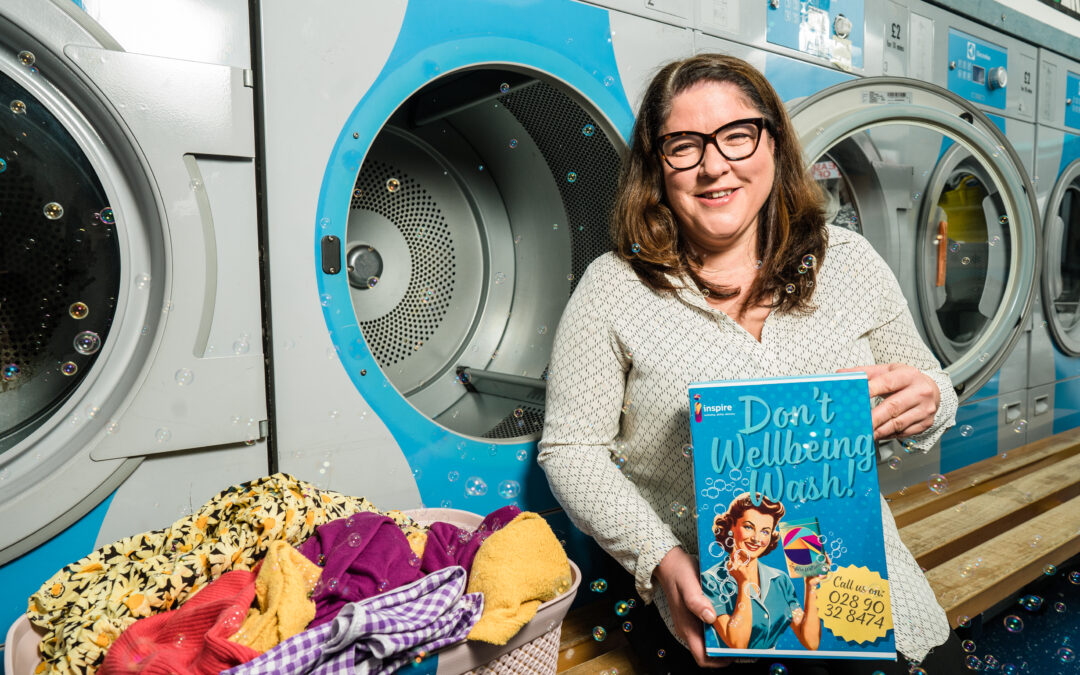
As we count down to World Mental Health Day on 10th October, Inspire’s focus is very much on our ‘Don’t Wellbeing Wash’ campaign.
Wellbeing washing is similar to green washing, its arguably more infamous cousin. It describes a company or organisational ethos that focus more on the illusion of staff wellbeing than the substance.
Of course, it’s easy to say “Don’t wellbeing wash” without further explanation but the theory underlying that message is sound and worth following. In fact, it underpins every aspect of Inspire’s values-based and person-centred employee assistance programme (EAP). We are an organisation with 65 years of experience behind us, a mental health social enterprise that understands the landscape in which we operate. For us, ethical, timely support for individuals at the point of need is the priority; compassionate practices trump corporate objectives every time.
As a consequence, our EAP customer feedback has praised the quality of care, the rapid access to it and the personal touch that we bring to the fore. These attributes, along with our high standards of governance, continue to mark us out.
In our view, responsible employers invest in their workforces by undertaking a hands-on and pragmatic approach to employee mental health. In fact, there are a number of things that you can consider, now, if you want to follow a better path.
Leaders, set the tone
Healthier teams are more likely to be present, engaged and committed to key strategic goals. On the other hand, people can become jaded and disengaged if they believe their employers to be only superficially interested in their wellbeing.
It may seem obvious but management is fundamental to establishing a happy workplace. The truth is, a positive working culture should no longer be simply regarded as a nice aspiration. In an era that will be forever defined by 2020’s Covid lockdowns, as well as the many associated traumas and upheavals, prioritising workforce wellbeing is a task demanding leadership and enthusiasm from the top.
Listen to your colleagues
Avoid falling into the trap of wellbeing washing by making a genuine commitment to your colleagues, taking the time to hear what they have to say. If you want to know what your employees think about something, ask them.
Tools such as pulse surveys will gather feedback from staff, collating a range of views on any number of topics. Understanding their needs and gauging their mood will empower you. It is from this point that you can take real steps to address effectively the concerns inherent to any organisation, from remuneration and workload to stress, the need for flexibility and workplace conflicts.
Provide ongoing support
Workplace wellbeing requires not only support from leadership but consistent commitment, too. It should come in the form of holistic and wide-ranging initiatives that feel current and flexible, responsive to team feedback and changing circumstances.
Inspire operates an extensive range of training programmes relating to mental health awareness, lifestyle and wellbeing, leadership and management, and development and coaching. Our 24-hour workplace counselling service is staffed by professionals, easily accessible and, of course, completely confidential. Beyond these, and in circumstances where targeted and sustained assistance is necessary, Inspire also offers long-term mental health supports. The Inspire Support Hub – a digital platform featuring a variety of self-help toolkits and information resources – complements and augments all of this.
If you would like to find out more about what we do, please feel free to contact enquiries@inspirewellbeing.org.
More from our blog
Menopause and work
The menopause is a natural biological process. It occurs when your ovaries age and naturally produce lower levels of reproductive hormones. The menopause may have a significant impact on home life and work performance. This can be unsettling, particularly if a particular role carries lots of responsibility. The hormonal changes…
Understanding Stepped Care and its role in workplace wellbeing
The stepped care model is a fundamental part of Inspire's workplace offering. So, what is it and why is it so important?

National Work Life Week
Finding Balance in a Busy World National Work Life Week takes place from 5-9 October 2026 and encourages people to reflect on how they can achieve a healthier, more sustainable balance between work and personal life. Every year, National Work Life Week encourages individuals and organisations to reflect on how…
World Mental Health Day
This month is an opportunity to notice how we support one another, challenge assumptions and create more inclusive spaces. By listening with empathy and staying open to different perspectives, we can all contribute to a kinder and more understanding workplace. World Mental Health Day, observed annually on 10 October, encourages…
World Gratitude Day
The power of appreciating what matters World Gratitude Day, celebrated annually on 21 September, encourages us to pause and recognise the people, experiences and opportunities that positively impact our lives. In today\'s fast-paced world, it\'s easy to focus on deadlines, demands and what\'s still left to do. Gratitude invites us…
World Suicide Prevention Day
World Suicide Prevention Day encourages people around the globe to raise awareness, reduce stigma and promote actions that can save lives. Suicide remains a significant public health challenge across the UK and Ireland. According to the latest available data, 5,717 suicides were registered in England in 2024, while Northern Ireland…
National Wellness & Happiness Happens Month
July invited us to pause. Through Alcohol Awareness Week and a focus on self-care, many of us took the opportunity to reflect, reset and make small changes – whether that meant becoming more aware of our habits, building in better routines, or simply taking a bit more time to look…
International Self-Care Day
In a world where busy often feels like the default, self-care can sometimes be misunderstood as a luxury – something we get to if we have the time. In reality, self-care is much simpler, more accessible, and far more essential than that. At its core, self-care is about consistently doing…

Alcohol and Me
Alcohol Awareness Week (6-12 July), returns this month with a simple but powerful focus: ‘Alcohol and me.’ Rather than telling us what we should or shouldn’t be doing, this year’s campaign is asking everyone to pause and reflect on their own relationship with alcohol, and how it fits into their…

PTSD Awareness Day
Trauma isn’t always dramatic or visible. In reality, it can come from things many of us experience at some point in life - not just rare or extreme events. It could be a car accident, losing someone suddenly, going through a serious illness, experiencing ongoing stress, or difficult experiences growing…

Men’s Mental Health Week
Every June, Men’s Health Week (15th to 21st) highlights a simple but powerful message: men’s health needs more attention - physically and mentally. While progress has been made, the reality across Ireland, the UK, and globally, is that men still experience poorer health outcomes and are less likely to seek…
World Day for Cultural Diversity
World Day for Cultural Diversity on 21 May celebrates the different cultures, identities, experiences and perspectives that shape who we are – and how diversity enriches our workplaces, communities and conversations.